Call for papers
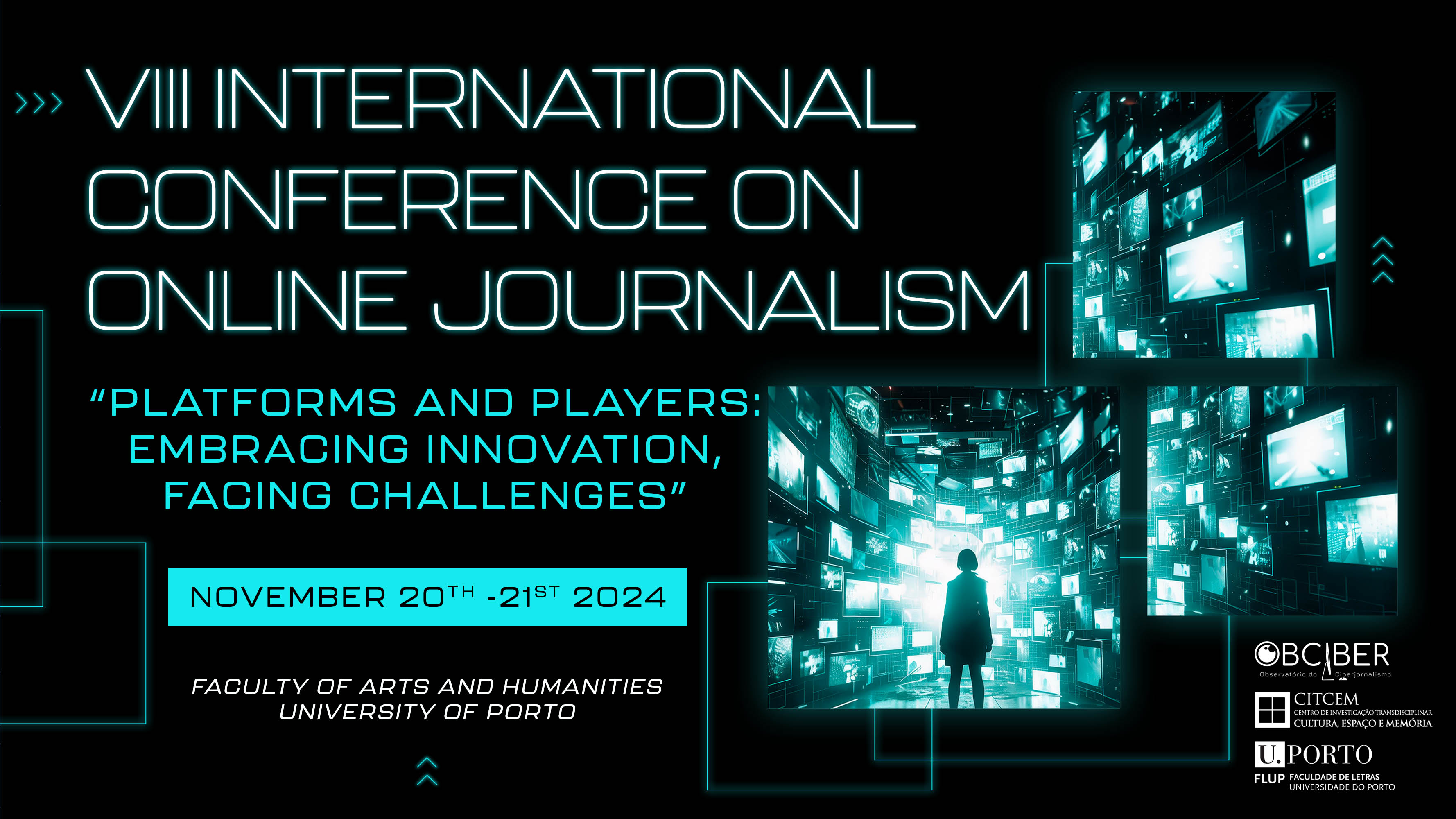
The organization of the VIII International Conference on Online Journalism (#8COBCIBER) invites interested researchers to submit,
by September 15th, 2024, communication proposals to be presented at the conference.

Communications should be about Cyberjournalism, with special preference for the topic of this #8COBCIBER,
"Platforms and players: embracing innovation, facing challenges". It is suggested that proposals may address,
among others, the following topics:

- Social implications of the “platformization” process;
- Innovation in social media platforms;
- Relevant platforms and actors in disinformation;
- New actors in the face of cyberjournalistic authority;
- Artificial Intelligence and cyberjournalism;
- Cybermedia, attention economy and Algorithms;
- Privacy and security of cyber media and cyber journalists;
- Corporate communication in digital environments vs. Cyberjournalism;
- Media literacy and cyberjournalism;
- Consumption of online news and psychosocial effects;
- Business models and monetization in cyberjournalism;
- Cyberjournalism and diversity (social, cultural, etc.);
- Cyberjournalism and gamification;
- New cyberjournalisms;
- Cyberjournalism and audience(s);
- Cyberjournalism as a response to “news deserts”;
- Strategies to mitigate growing news avoidance

Proposals, in the form of an extended abstract, may be written in English, Portuguese, Spanish or French.
Each of them must include a description of 400 to 500 words, which includes, in particular, the topic and its relevance,
hypothesis or argument, conceptual and methodological framework, expected results and up to five keywords.

Researchers must send their proposals by filling out this form. The proposals will then be evaluated by the #8COBCIBER
Scientific Committee, and the result will be communicated to all authors by October 10th.

The final articles may be published in an edition of the journal Estudos em Comunicação / Communication Studies
(Scopus, Q3), which will have a call for papers aligned with the Congress theme, or in a book to be published by Livros LabCom.
In both cases, publications will take place in 2025, and authors must deliver complete articles by June 30, 2025.

#8COBCIBER will take place at the Faculty of Arts and Humanities of the University of Porto, Portugal,
on November 20th and 21st, 2024, in person (on the 20th and 21st) and online (afternoon on the 20st),

#8COBCIBER is organized by ObCiber - Cyberjournalism Observatory,
CITCEM - Transdisciplinary Research Center for Culture, Space and Memory and
FLUP - Faculty of Arts and Humanities of the University of Porto.

IMPORTANT NOTE: Researchers who submitted proposals by June 30th
will receive the evaluation results by July 31st, 2024.
Timetable
Opening of the call for papers (extended abstracts): 15/04/2024

Call for papers close: 15/09/2024 (new deadline)

Communication of results: 10/10/2024

Closing of the 1st registration phase: 31/10/2024

Closing of the 2nd registration phase: 15/11/2024

Congress: 20 and 21/11/2024

Deadline for submitting full articles: 30/06/2025
Programme
Wednesday, November 20th

08:30 am – Registration open

09:30 am – Opening Session

10:00 am – Opening Lecture
The use of social networks and Artificial Intelligence by Basque media and journalists
Koldo Meso (Universidad del País Vasco, Spain)
Moderation: Fernando Zamith

11:00 am – Coffee break

11:15 am – Communications session 1 - Innovation

01:00 pm – Lunch break

02:15 pm – Communications session 2 (online) - Players, innovation and challenges

03:30 pm – Conference
Journalism Studies in the. Age of AI
Edson C. Tandoc Jr. (Nanyang Technological University, Singapore)
Moderation: Inês Amaral

04:30 pm – Coffee break

04:45 pm – Session
“20 Years of JPN - JornalismoPortoNet”
Online Journalism For Today’s Youth - News on Instagram and TikTok
Anna Jandrisevits (Journalist and Managing Editor at Die Chefredaktion)

06:00 pm - Communications session 3 (online) - Platforms, challenges and innovation
Communication Sessions
Wednesday, November 20th
11:15 am – Communications session 1 – Innovation
Experiências imersivas do ciberjornalismo português no metaverso
Paulo Coraceiro (CECS-UMinho / CIES-Iscte, Portugal)
Da página à tela: o impacto da Covid-19 nas visualizações de dados nas newsmagazines portuguesas
Ilo Alexandre (Universidade Lusófona, Portugal)
O Podcast como ferramenta de fidelização de públicos: os 50 anos da Revolução de Abril na Antena 1
Helena Lima e Isabel Reis (Faculdade de Letras / CITCEM, Portugal)
Engaging Youth in News Through Digital Co-Creation: insights from YouNDigital newsroom
Margarida Maneta, Maria José Brites, Marisa Torres da Silva, Lúcia Mesquita, Mariana Muller
(CICANT, Universidade Lusófona; NOVA FCSH, Universidade Nova de Lisboa, Portugal)
A ciência no webjornalismo – O projeto “Azul” do jornal PúblicoCatarina Rodrigues e Ricardo Morais
(UAc / LabCom e FLUP / CITCEM / LabCom, Portugal)
Moderação: Hélder Bastos (Faculdade de Letras / CITCEM, Portugal)
…
02:15 pm – Communications session 2 (online) – Players, innovation and challenges
Artificial Intelligence in Journalism – Empirical Investigation of Hungarian Journalists’ Attitudes and GenAI Application Practices
Monika Andok, Andras Radetzky, Zoltan Rajki, Dora Szilczl (Pazmany Peter Catholic University, Hungria)
Clickbait sells, but does not inform: how reputable digital media use clickbait and how audience consumes it
Alba Diez-Gracia, Iris Sánchez-Sobradillo, Pilar Sánchez-García, Dolors Palau-Sampio (University of Valladolid, University of Valencia, Espanha)
Inovação nos media alternativos portugueses: os casos do Fumaça e Divergente
Carla Ganito, Cátia Ferreira (Universidade Católica Portuguesa, CECC, Portugal)
A agonia nos media noticiosos: Um estudo comparativo da cobertura noticiosa da eutanásia em Portugal e no Reino Unido
Bruno Frutuoso Costa (CIES-Iscte, Iscte – Instituto Universitário de Lisboa)
Moderação: Ricardo Morais (Faculdade de Letras / CITCEM, Portugal)
…
06:00 pm – Communications session 3 (online) – Platforms, challenges and innovation
A Televisão brasileira em um ambiente de reelaboração com a implantação da TV 3.0
Patricia Ap. Amaral, Rodrigo Gabrioti (Universidade Estadual Paulista “Júlio de Mesquita Filho”, Brasil)
Tendencias y transformaciones digitales. El caso del ciberperiodismo peruano
María Mendoza Michilot, Lucia Barja Marquina (Universidad de Lima, Perú)
As potencialidades da inteligência artificial na construção de informação jornalística geolocalizada
Eduardo Campos Pellanda, Mágda Rodrigues da Cunha (PUCRS, Brasil)
Desinformación en la era de la Inteligencia Artificial: Riesgos, Oportunidades y Perspectivas Éticas
Moisés Limia Fernández (Universidad Jorge Tadeo Lozano, Colômbia)
Tríptico big tech e o jornalismo digital em seu estágio de plataformização
Suzana Barbosa (Universidade Federal da Bahia)
Moderação: Helena Lima (Faculdade de Letras / CITCEM, Portugal)
Thursday, November 21st
08:45 am – Communications session 4 – Platforms
10:00 am – Conference
Journalism amid an age of platformization,
Oscar Westlund (Oslo Metropolitan University, Norway)
Moderation: Hélder Bastos
11:00 am – Coffee break
11:15 am – Communications session 5 – Challenges
01:00 pm – Lunch break
02:15 pm – Communications session 6 – Players
03:30 pm – Conference
Platforms and disinformation: challenges of journalism in the era of populist and racist algorithms
Inês Amaral (University of Coimbra, Portugal)
Moderation: Ana Isabel Reis
04:30 pm – Coffee break
04:45 pm – Panel
Platforms and players: embracing innovation, facing challenges
Amilcar Correia (Jornal Público)
Rita Neves Costa (Jornal de Notícias)
Miguel Soares (Antena 1)
João Fernando Ramos (CNN Portugal)
Moderation: Ana Isabel Reis
06:00 pm – Announcement of the winners and delivery of the 2024 Cyberjournalism Awards
06:30 pm – Closing (ObCiber)
Communication Sessions
Thursday, November 21st
08:45 am – Communications session 4 – Platforms
How Data Visualization is Gaining Space on the Instagram Profile of News Outlets
Ana Figueiras (Universidade Lusófona, Portugal)
The Invisible Hand: Using AI Platforms to Identify the Scale of Propaganda in Albanian Media
Elvin Luku, Erion Elezi (University of Tirana, Albânia)
Plataformas audiovisuales en la era de la IA. Youtube como herramienta de información en torno al cáncer de mama
María Ganzabal, Jesús Pérez Dasilva, Terese Mendiguren, Urko Peña (Universidad del País Vasco, Espanha)
“Vocês vão ter que aguentar os cortes”. Uma análise do uso no Instagram de cortes do programa
Roda Viva por candidatos à prefeitura de São Paulo em 2024
Rodrigo de Castro Resende (Universidade da Beira Interior, Portugal)
Moderação: Ana Isabel Reis (Faculdade de Letras / CITCEM, Portugal)
…
11:15 am – Communications session 5 – Challenges
Beyond Verification: The Evolving Role of Fact-Checking Organisations in Media Literacy Education for Youth
Lucia Mesquita, Margarida Maneta, Maria José Brites (Universidade Lusófona, Portugal)
Plataformização e ciberfeminismo: desafios e possibilidades de combate à algoritmização de gênero
Taynãh Marques de Lira Andrade (Universidade Federal de Pernambuco / Universidade de Coimbra, Portugal)
Hipertextualidade e perenidade no ciberjornalismo como ferramentas de produção de conhecimento e enfrentamento à desinformação
Ana Paula Alencar, Ricardo Morais, Marco Schneider (UFFluminense; FLUP/CITCEM; Inst. Brasileiro de Informação em Ciência e Tecnologia)
Financiamento de portais digitais nos quase desertos de notícias de Santa Catarina: análise a partir do Atlas da Notícia (2024)
Lucas Santos Carmo Cabral, Natália Huf (Universidade Federal de Santa Catarina, Brasil)
7Montes: o caso do jornal online que nasceu em Trás-os-Montes com a promessa de servir comunidades locais
transmontanas que residem em “desertos de notícias”
Susana Ferrador, Fernando Zamith, Pedro Jerónimo (FLUP / Universidade da Beira Interior)
Follow the link: Circulação de sites de desinformação socioambiental em aplicativos de mensageria no Brasil
Débora Salles, Rose Santini, Marina Santos, Julia Dias, Thamyres Magalhães, Bianca Melo
(Universidade Federal do Rio de Janeiro / Universidade Federal de Alagoas, Brasil)
Moderação: Inês Amaral (Universidade de Coimbra/CECS, Portugal)
…
02:15 pm – Communications session 6 – Players
Do papel para o digital: a imprensa de estilo de vida na rede social Instagram
Pedro Eduardo Ribeiro (Universidade do Minho, CECS, Portugal)
Valores-notícia e newsmakers no ciberespaço diluído: o caso EN2
Fernando Zamith, Sandra Marinho (ObCiber/CITCEM/FLUP, Universidade do Porto; CECS/ICS, Universidade do Minho, Portugal)
La Inteligencia Artificial en la Mirada de los Lectores: Estudio de Comentarios en prensa en Español y Portugués
Urko Peña Alonso, Koldobika Meso Ayerdi, Simón Peña Fernández, Ainara Larrondo Ureta (Universidad del País Vasco, Espanha)
“Penso, logo comento”? Contributos para uma análise da interatividade entrecomentadores e notícias publicadas nas redes sociais em Portugal
Fábio Ribeiro (UTAD; CICANT e CECS, Portugal)
Moderação: Paulo Frias (Faculdade de Letras / CITCEM, Portugal)
Keynote Speakers
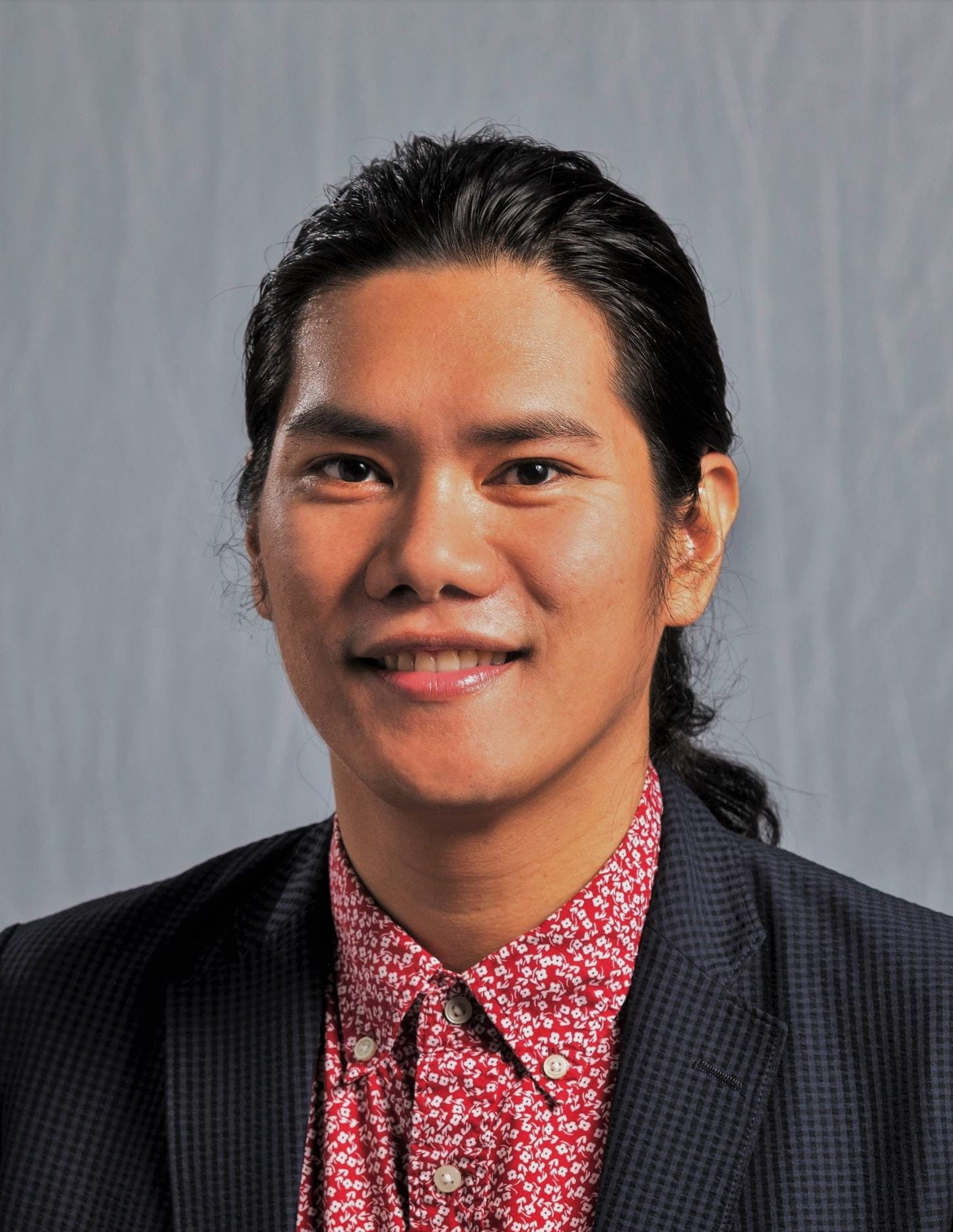
Edson C. Tandoc Jr.
Professor at the Wee Kim Wee School of Communication and Information (WKWSCI), where he is Associate Chair for Research and Director of the Internet and Information Integrity Center (IN-cube) at Nanyang Technological University (NTU) in Singapore. He is also the Associate Editor of Digital Journalism magazine and the Associate Editor of Research in Human Communication. Tandoc’s research focuses on the sociology of message construction in the context of digital journalism. His studies tackle influences on journalists and focus on the impact of journalistic roles, new technologies and public feedback on the various phases of the news management process.
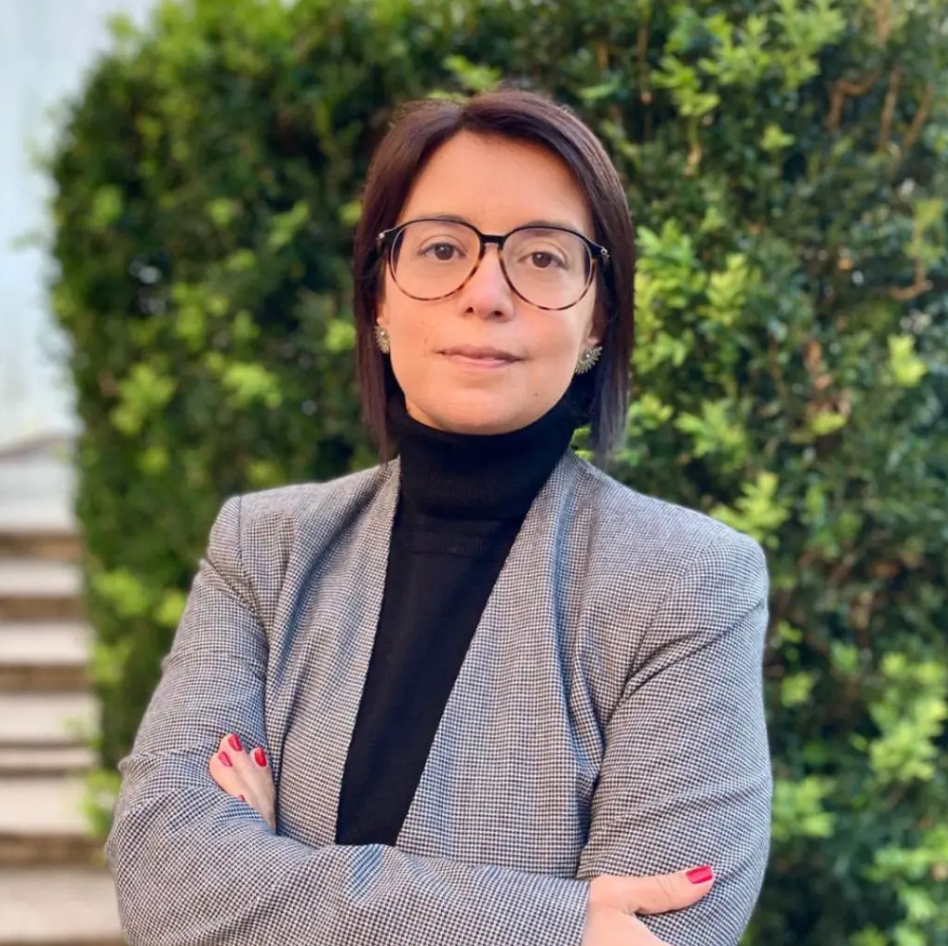
Inês Amaral
Associate Professor of the Communication Section of the Department of Philosophy, Communication and Information (DFCI) of the Faculty of Arts of the University of Coimbra. She is deputy director of DFCI and Coordinator of the Communication Section. PhD in Communication Sciences (specialty in Interactive Media) from the University of Minho. She is an integrated researcher at the Center for Social Studies at the University of Coimbra (Line Europe and the Global South: Heritage and Dialogue). He is a member of the Observatório Masculinidades.pt research team. She is also a collaborating researcher at the Center for Communication and Society Studies at the University of Minho. She is co-responsible researcher for the project “MediaTrust.Lab – Regional Media Laboratory for Civic Trust and Literacy” (PTDC/COM-JOR/3866/2020). He has developed research on sociability in digital social networks, participation and social media, gender and media, media and digital literacy, technologies and active aging, audiences and media consumption in the digital era, and disinformation.

Oscar Westlund
Professor at the Department of Journalism and Media Studies at Oslo Metropolitan University, Norway, where he co-leads the OsloMet Digital Journalism Research Group. He also holds a secondary position at the University of Gothenburg. Westlund specializes in digital journalism, fact-checking, platforms, media management, news consumption and mobile. He is editor-in-chief of Digital Journalism magazine and has also been responsible for special editions of several other important international scientific journals. He is currently involved in several research projects focused on disinformation.

Koldo Meso Ayerdi
Full Professor and Director of the Journalism Department at the University of the Basque Country, Spain, where he obtained his doctorate in Journalism. He is the organizer of Ciberpedi – Congreso Internacional de Ciberperiodismo, held in Bilbao since 2009, and a member of the Gureiker and Infotendencias research groups. Co-author of the first book on online journalism in Spain, he has extensive research in the area, published in more than 100 articles, chapters and books on topics such as convergence, hybrid media system, active audience, digital language, news reporting and educational innovation. He was a visiting researcher at the Federal University of Bahia, Brazil, and has frequently participated in national and international research projects and networks. He is also an expert in research methods applied to communication.
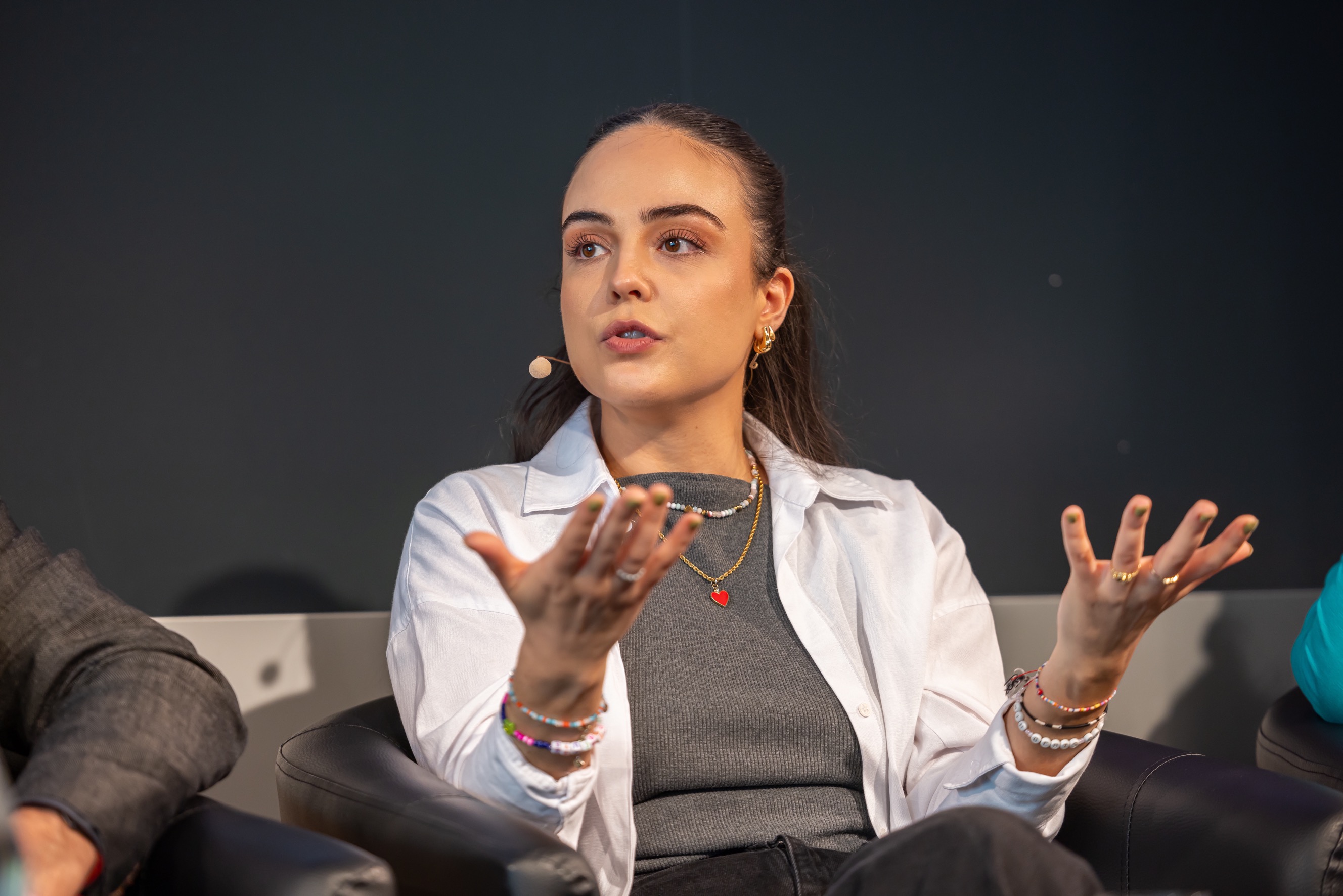
Anna Jandrisevits
Anna Jandrisevits (27) is a journalist and managing editor at „Die Chefredaktion,” an online medium on Instagram and TikTok, that produces journalism for the Generation Z. She completed her journalism studies at the University of Applied Sciences in Vienna, where she has been teaching her own course on online journalism since March. She conducts international workshops on journalism for young people on social media. In 2024, she was named one of Austrias top 30 journalists under 30.
Registration
Attendance Options

In person (20th and 21st) / Online (afternoon of the 20th)

Closing of the 1st registration phase: 31/10/2024
Closing of the 2nd registration phase: 15/11/2024

In person

1st phase (until October 31st) – €80; Students – €40
2nd phase (until November 15th) – €130; Students – €65

Online

1st phase (until October 31st) – €160; Students – €80
2nd phase (until November 15th) – €260; Students – €130

Payment form
Scientific Committee
Alejandro Rost (Univ. Nacional del Comahue, Argentina)
Amy Schmitz Weiss (San Diego State Univ., EUA)
Ana Isabel Reis (Univ. Porto, Portugal)
Beth Saad Corrêa (Univ. São Paulo, Brasil)
Concha Edo (Univ. Complutense de Madrid, Espanha)
David Domingo (Univ. Libre de Bruxelles, Bélgica)
Elvira García de Torres (Univ. CEU Cardenal Herrera, Espanha)
Fernando Zamith (Univ. Porto, Portugal)
Gerson Luiz Martins (Univ. Federal de Mato Grosso do Sul, Brasil)
Helder Bastos (Univ. Porto, Portugal)
Helena Lima (Univ. Porto, Portugal)
Inês Amaral (Univ. Coimbra, Portugal)
Javier Díaz Noci (Univ. Pompeu Fabra, Espanha)
João Canavilhas (Univ. Beira Interior, Portugal)
José Pereira (Univ. Santiago de Compostela, Espanha)
Koldo Meso (Univ. País Vasco, Espanha)
Luís António Santos (Univ. Minho, Portugal)
Lyudmyla Yezers’ka (Univ. Piura, Peru)
Paulo Frias (Univ. Porto, Portugal)
Pedro Jerónimo (Univ. Beira Interior, Portugal)
Ricardo Morais (Univ. Porto, Portugal)
Suzana Barbosa (Univ. Federal da Bahia, Brasil)
Organization
Organizing Committee

Ana Isabel Reis
Fernando Zamith (Coordinator)
Helena Lima
Inês Amaral
Luísa Torre
Paulo Frias
Pedro Jerónimo
Ricardo Morais


Organization

ObCiber - Cyberjournalism Observatory
CITCEM - Transdisciplinary Research Center for Culture, Space and Memory
FLUP - Faculty of Arts and Humanities of the University of Porto
 obciber.com